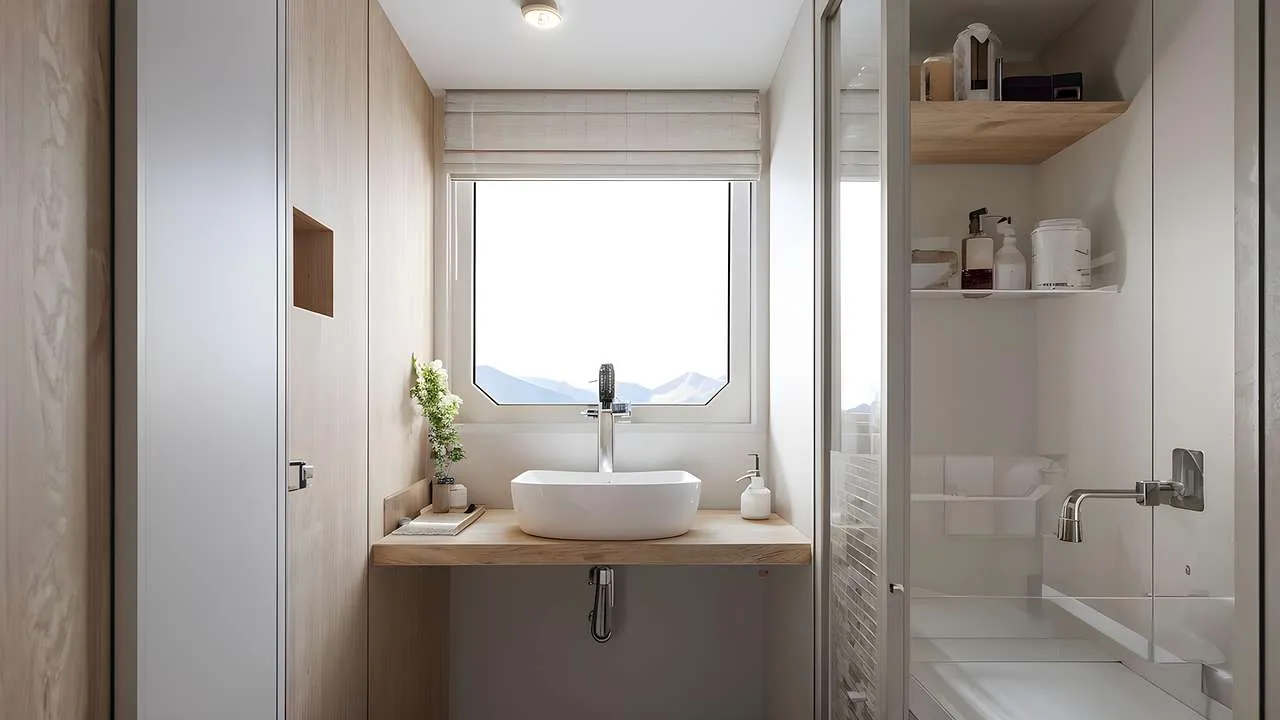
Small bathroom ideas can transform tight spaces into functional, beautiful rooms. Drawing on years of experience designing compact baths, you can maximize every inch without sacrificing style. In this guide, you will learn how to optimize layout, color, storage, lighting, and fixtures to create a space that feels larger and more liveable. Start by assessing your current footprint and listing must have elements before choosing fixtures and finishes.
Key Principles for Small Bathroom Design
Layout and Traffic Flow
Efficient layouts prioritize clear pathways and accessible fixtures. A linear run with a wall mounted vanity and a compact toilet keeps the center of the room open. If space allows, a pocket door or a sliding door can remove the swing clearance that eats into the room. Avoid placing a vanity directly opposite the shower if it blocks natural movement. Map out a path on the floor or tape outlines to test how you will move through the space before purchasing items.
Color and Materials
Light colors, consistent materials, and reflective surfaces create an airy feel. Choose a monochromatic palette in whites, soft grays, or warm beiges. Large format tiles reduce grout lines, which helps the eye travel and makes the room appear larger. Use glossy or satin finishes on walls and fixtures to enhance light return, but balance with slip resistant floors for safety.
Storage Solutions
Hidden storage is essential in small baths. Install a wall mounted vanity with integrated drawers, a recessed medicine cabinet, and floating shelves above the toilet. Recessed niches in the shower hold toiletries without taking floor space. Consider a tall, slim cabinet or a vanity with a shallow depth to preserve walkable area. Add a recessed linen niche or pull out organizers inside cabinets to keep surfaces clear.
Lighting and Mirrors
Layered lighting reduces shadows and expands perceived space. Use a bright overhead light paired with task lighting near the vanity. Mirrors should be large and can extend to the ceiling or be placed on two opposite walls to maximize reflection. A mirrored cabinet adds storage and light, while LED strips behind the mirror offer soft, ambient glow without clutter.
Fixtures and Space Saving Tips
Opt for a compact toilet and a wall mounted or corner sink. A frameless glass shower enclosure visually opens the room, while a sliding or pocket door saves floor space. Choose a single style of hardware and finishes to create a cohesive look. If possible, select a shower with built in seat or bench for flexibility, and consider a tubless design when remodeling.
Practical Ideas and Examples
Adopt modular storage with adjustable shelves in the vanity, choose a continuous countertop, and use vertical space for hooks and rails. Install a single oversized mirror to amplify light and reduce visual clutter. Use a light, cool color palette and consistent metal finishes to create a cohesive look. If you remodel, prioritize water resistant materials and easy cleanup surfaces to sustain a small bathroom over time. Consider contractors or designers who specialize in compact baths to ensure efficient use of plumbing and wiring.
Comparison: Traditional vs Compact Design
| Feature | Traditional bathroom | Small bathroom guidance | Why it helps |
|---|---|---|---|
| Vanity | Freestanding or bulky | Wall mounted or compact | Free up floor space |
| Shower | Tub enclosure | Frameless glass or quadrant shower | Visually expands the room |
| Door | Swing door | Pocket or sliding door | Eliminates swing clearance |
| Mirrors | One small mirror | Oversized or mirrored wall | Increases perceived space |
| Lighting | Single ceiling light | Layered lighting | Reduces shadows |
Conclusion Small bathroom ideas rely on a few core strategies: optimize layout, embrace light colors and reflective surfaces, maximize storage, and use space saving fixtures. When executed well, a compact bath becomes calm, efficient, and stylish, not just functional.
Summary: Small bathroom ideas combine smart layouts, hidden storage, light palettes, and space saving fixtures to maximize function without sacrificing style. Implementing these strategies can transform a compact bath into a calm, usable space.